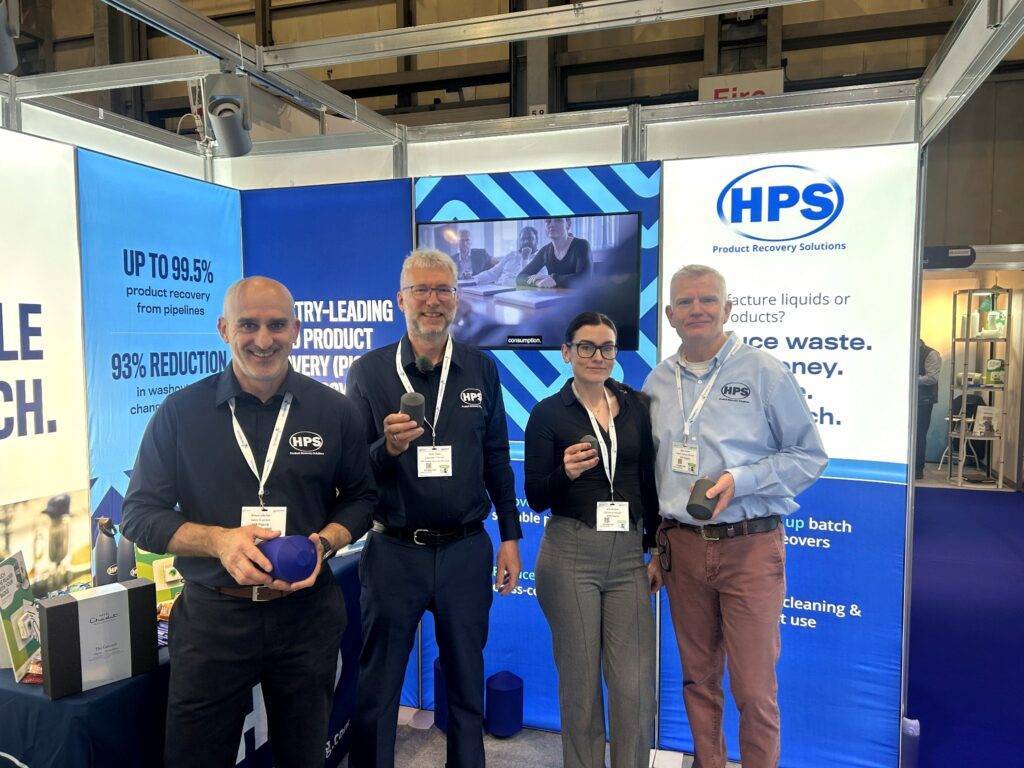
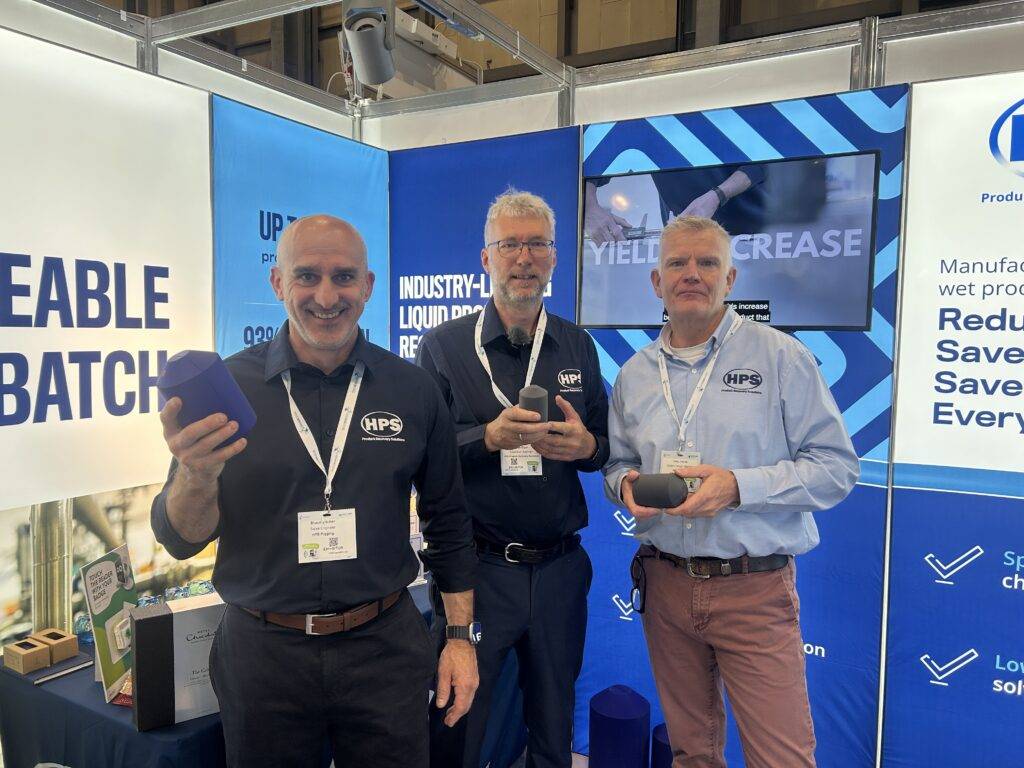
HPS recently exhibited at CHEM UK at the NEC Birmingham, one of the UK’s leading B2B trade shows for the chemical, process engineering and formulated product industries.
After speaking with manufacturers, contractors, bottlers, process engineers and project teams at the show, one theme came through clearly: businesses are continuing to look for practical ways to improve efficiency, reduce waste and get more value from their production processes.
Each application was different, but many of the conversations came back to similar challenges. Product left in pipelines, lengthy changeovers, cleaning requirements, sustainability targets, cross-contamination risks and return on investment were all key topics of discussion.
For businesses handling liquids, gels, pastes, creams, chemicals or formulated products, product recovery remains a significant opportunity.
Product Waste Is Still a Common Challenge
One of the most common topics raised at CHEM UK was waste.
For many manufacturers, product left in the line after transfers or changeovers is still a day-to-day issue. This is particularly true for viscous or high-value liquids, gels, pastes and formulated products, where even small amounts of retained product can build up into a significant loss over time.
In some cases, this product is flushed away during cleaning. In others, it takes extra water, cleaning chemicals, time and manual labour to remove. Either way, it means lost product, higher disposal costs and a less efficient process.
Recovering residual product from the pipeline before cleaning begins helps to significantly reduce these losses. It allows manufacturers to recover more usable product, reduce waste and start the cleaning process with less residue left in the pipework.
Changeover Time Came Up Again and Again
Changeover time was another regular topic of conversation.
Many manufacturers are producing more product variations than ever, whether that means different formulations, colours, fragrances, viscosities or batch sizes. For contract manufacturers in particular, frequent changeovers are part of everyday production.
Every changeover takes time. Lines need to be cleared, cleaned and prepared for the next product. If there is still product left in the pipework, the process becomes slower, more resource-intensive and harder to manage efficiently.
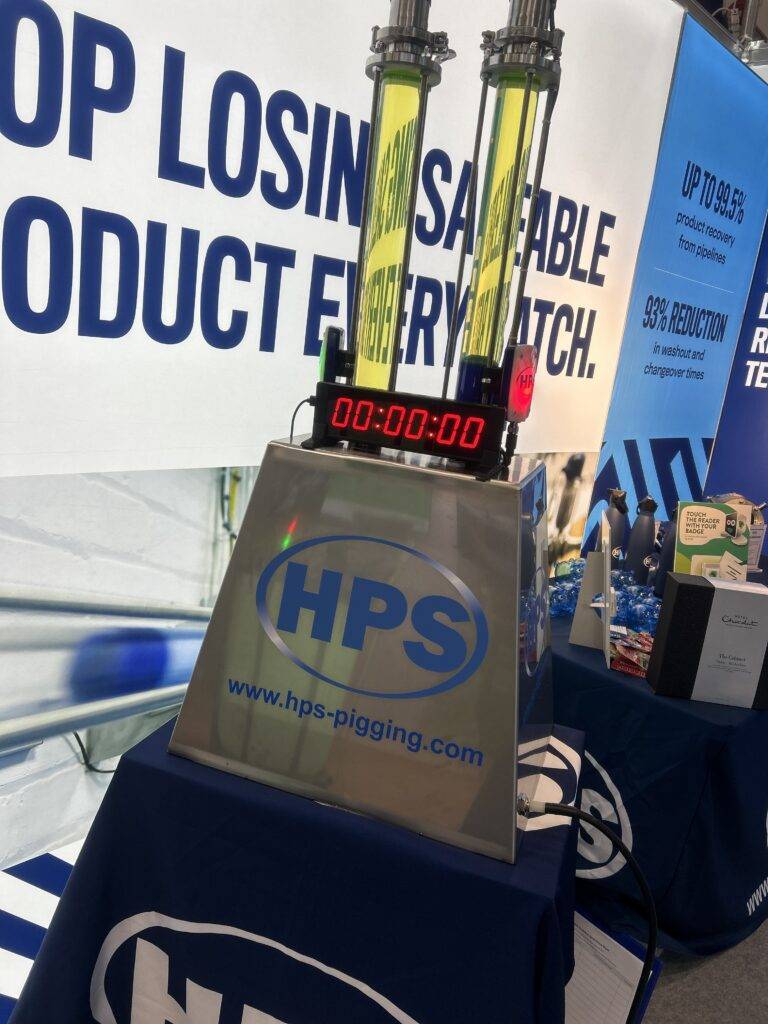
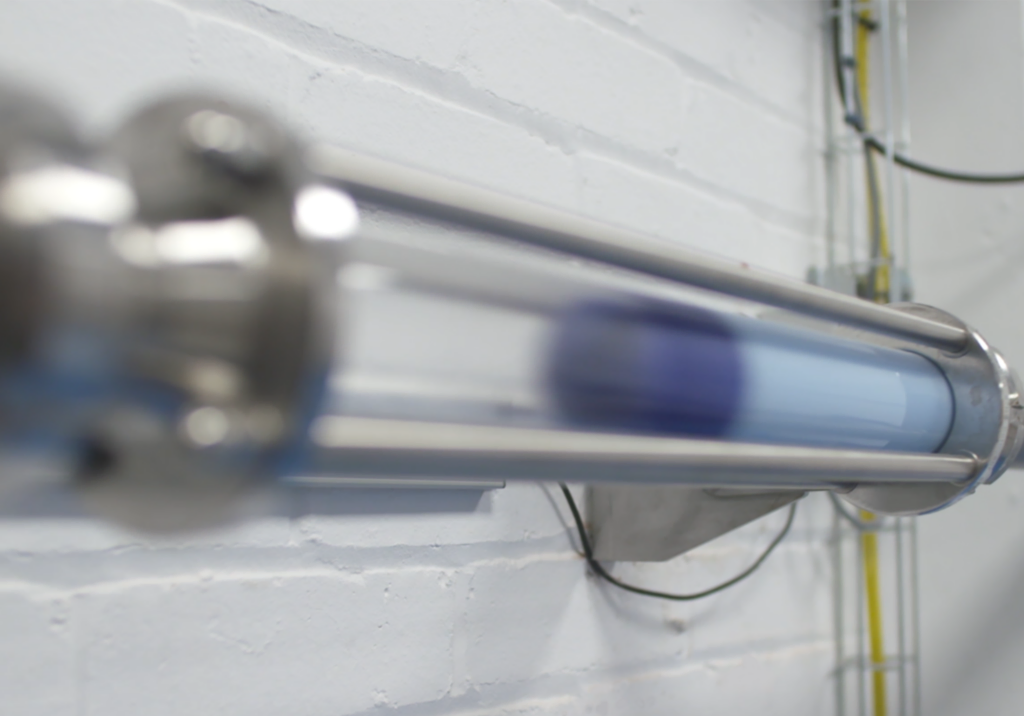
Liquid product recovery (“pigging“) technology helps by removing nearly all the product from the line before cleaning starts. With barely a trace left behind, manufacturers reduce flushing, speed up cleaning and move on to the next batch more efficiently.
Cleaning, Waste and Sustainability Are Closely Connected
Cleaning was another key area of discussion at CHEM UK.
When product remains in the pipeline, it usually has to be removed with water, cleaning chemicals or other cleaning processes. This can increase water usage, effluent volumes, chemical consumption and the time needed to clean the line properly.
For manufacturers working towards sustainability targets, this is an important area to review. Reducing waste is not only about the product itself. It is also about reducing the resources needed to clean up after production.
By recovering product before cleaning begins, pigging helps reduce the amount of residue left in the pipework. This supports more efficient cleaning, lower waste volumes and helps manufacturers reduce the environmental impact of their production processes.
Cross-Contamination Was Another Key Concern
Cross-contamination was also raised during conversations at the show.
For manufacturers handling multiple products on the same line, even small amounts of residual product can create issues. This is particularly important when switching between different formulations, colours, fragrances, chemicals or product types.
If product remains in the pipework after a transfer, it increases the risk of contamination during the next batch. It also makes cleaning more difficult, especially where products are viscous, sticky or hard to remove.
Pigging can help reduce cross-contamination risks during product changeovers by recovering product from the pipeline before cleaning begins. With less residue left in the line, manufacturers can support cleaner changeovers, reduce the risk of product mixing and improve confidence when moving from one batch to the next.
ROI Still Matters
While waste reduction and sustainability are important, return on investment is still a major factor in any project.
At CHEM UK, many conversations came back to the same question: where is product being lost, and what is that loss worth over time?
The answer will be different for every manufacturer. It depends on the value of the product, the length and diameter of the pipework, the frequency of transfers and changeovers, the amount of product left in the line and so on.
For high-value products, frequent batches or long pipelines, the savings from recovering product will be significant. In many cases, the value comes not only from the recovered product itself, but also from reduced cleaning time, lower waste disposal costs and improved production efficiency.
Why This Matters for Formulated Product Manufacturers
For manufacturers of chemicals, homecare products, personal care products, coatings and other formulated liquids, product recovery can support a wide range of operational goals.
It increases yields, reduces waste, improves changeovers, lowers cleaning requirements and makes production lines more flexible.
These benefits are especially important where products are viscous, high-value, difficult to clean or produced in frequent batches.
With pressure on manufacturers to improve efficiency, reduce costs and operate more sustainably, recovering product from pipework is a practical area to review.
Where Pigging Can Help
The conversations at CHEM UK highlighted a clear point: many manufacturers are looking for practical ways to improve efficiency without making unnecessary changes to their wider process.
Pigging is a proven, tangible and convenient way to do this. By recovering product that would otherwise remain in the pipeline, manufacturers reduce waste, improve cleaning efficiency and get more value from every batch.
HPS pigging systems are bespoke-designed around each application, taking into account the product, pipework, production process and operational goals. Whether the priority is reducing waste, speeding up changeovers, improving product recovery, reducing cross-contamination risks or supporting sustainability targets, the right pigging system can make a noticeable difference.
Speak to HPS About Your Process
If you visited HPS at CHEM UK, thank you for taking the time to speak with our team.
If you would like to find out how pigging could help reduce waste, improve changeovers and recover more product from your process, please contact HPS.
Our team will be happy to discuss your application and advise on the most suitable solution for your production line.